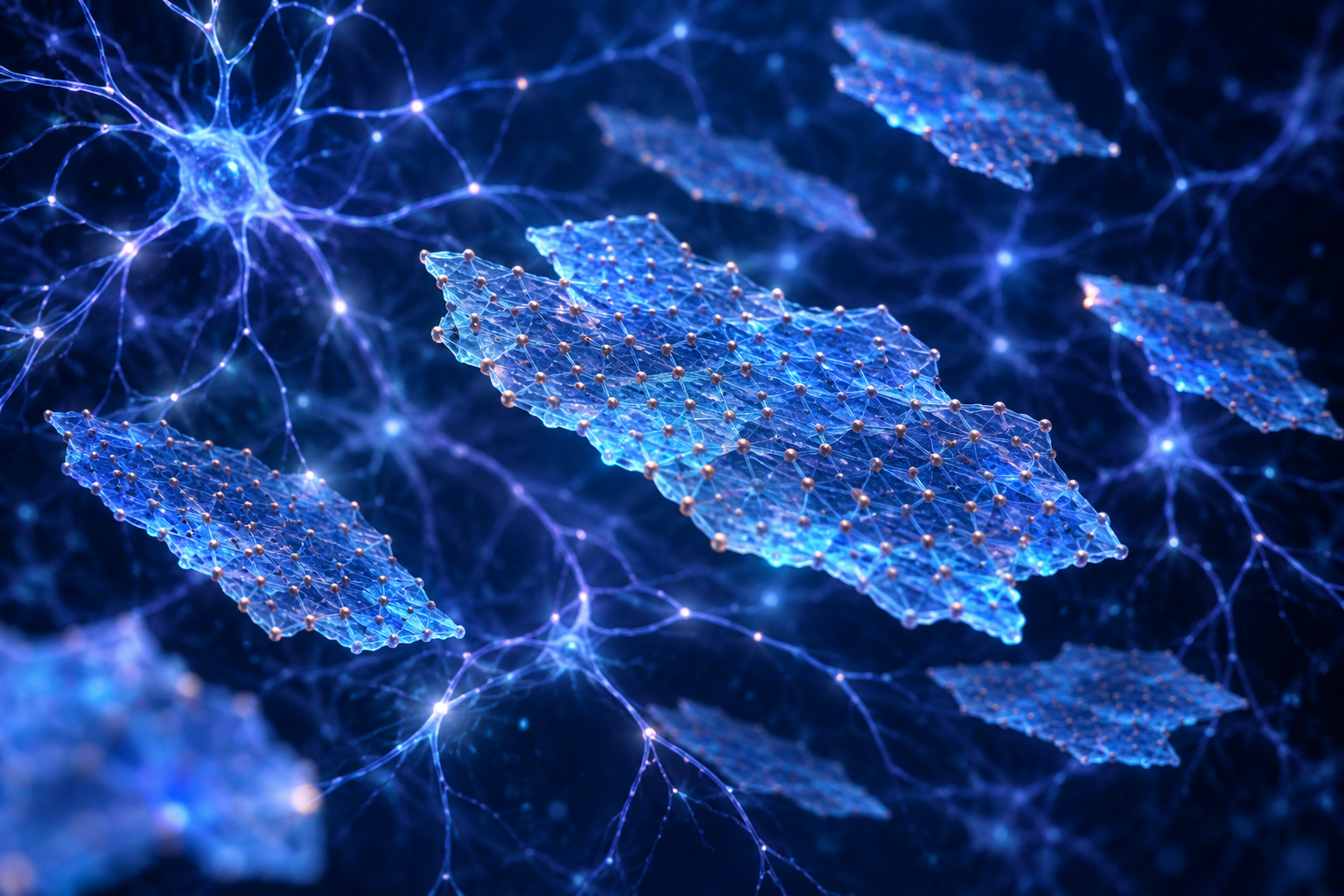
A team from Empa, ETH Zurich, Balgrist University Hospital and the University of Zurich has developed the nanodye ‘Zurich Blue’. According to an Empa release published on 29 October, the material is intended to enable high-resolution images of brain structures. This is laboratory research, not an approved contrast agent or a treatment available to patients.
The starting point was Egyptian Blue, a copper-based pigment used more than 4,500 years ago. It fluoresces under near-infrared light. The team adapted that property for two-dimensional nanostructures: flame synthesis first forms metal-oxide particles, and laser irradiation then assembles them into very bright, thin layers.
The researchers see possible diagnostic uses. In experiments, the dye could help track the movement of individual immune cells through tissue in real time. They also mention the possibility of combining it with therapeutic substances. Both ideas need further study.
The next step is to advance the material towards possible clinical use. Its safety, effectiveness and practical implementation still need to be tested. For now, ‘Zurich Blue’ mainly demonstrates how a principle behind an ancient pigment can be adapted as a modern research tool.